

Metal Roofing Screws
-
ST Fastening #9 x 1" ST-XL Woodbinder Metal Roofing Screw - Bright White | Qty. 3,000 (Carton)
Free Shipping!Regular price $799.00Regular priceUnit price per -
ST Fastening #10 X 1" Kwikseal Woodbinder Metal Roofing Screw - Electro-Galvanized | Qty. 3,000 (Carton)
Free Shipping!Regular price $214.99Regular priceUnit price per -
ST Fastening #10 X 1" Kwikseal Woodbinder Metal Roofing Screw, T17 Sharp Point - Electro-Galvanized, Qty. 3,000 (Carton)
Free Shipping!Regular price $214.99Regular priceUnit price per -
ST Fastening #14 X 1-1/2" ZXL Tapping Woodbinder Metal Roofing Screw, Unpainted | Qty. 1,500 (Carton)
Free Shipping!Regular price $529.00Regular priceUnit price per -
ST Fastening #12 x 3/4" ZXL Woodbinder Metal Roofing Stitch Screw - Unpainted | Qty. 2,500 (Carton)
Free Shipping!Regular price $579.00Regular priceUnit price per -
ST Fastening #12 x 3/4" Kwikseal Woodbinder Metal Roofing Stitch Screw - Electro-Galvanized | Qty. 2,500 (Carton)
Free Shipping!Regular price $242.00Regular priceUnit price per -
ST Fastening #12 x 3/4" Type 17 Woodbinder Metal Roofing Screw For OSB - Unpainted | Qty. 2,500 (Carton)
Free Shipping!Regular price $262.00Regular priceUnit price per -
ST Fastening #12 x 3/4" ST-XL Woodbinder Metal Roofing Stitch Screw - Plain Finish | Qty. 2,500 (Carton)
Free Shipping!Regular price $679.00Regular priceUnit price per -
ST Fastening #12 X 1-1/2" ZXL Type 17 Woodbinder Metal Roofing Screw For OSB, Unpainted | Qty. 2,500 (Carton)
Free Shipping!Regular price $699.00Regular priceUnit price per -
ST Fastening #12 X 3-3/4" InsulDrill Metal Roofing Screw - Bright White | Qty. 1,000 (Carton)
Free Shipping!Regular price $899.00Regular priceUnit price per -
ST Fastening #10 x 1" SS Woodbinder Metal Roofing Screw - Plain Finish | Qty. 3,000 (Carton)
Free Shipping!Regular price $679.00Regular priceUnit price per -
ST Fastening #10 x 1" Eclipse Woodbinder Metal Roofing Screw - Bright White | Qty. 3,000 Screws (Carton)
Free Shipping!Regular price $467.99Regular priceUnit price per -
ST Fastening #10 x 1" Pancake Head Metal to Wood ST Clip Screw - 304 Stainless Steel | Qty. 3,000 Screws (Carton)
Free Shipping!Regular price $469.99Regular priceUnit price per -
ST Fastening #17 x 3/4" Tapping Steelbinder Metal Roofing Screw - Electro-Galvanized - Qty. 2,500 - Carton
Free Shipping!Regular price $679.00Regular priceUnit price per -
ST Fastening 1/4" x 7/8" Self-Drilling ZXL Steelbinder Metal Roofing Screw - Electro-Galvanized | Qty. 2,000 (Carton)
Free Shipping!Regular price $679.00Regular priceUnit price per -
ST Fastening #14 x 3/4" Tapping ZXL Steelbinder Metal Roofing Screw - Electro-Galvanized - Qty. 2,500 (Carton)
Free Shipping!Regular price $849.00Regular priceUnit price per -
ST Fastening #12 x 1-1/4" Self-Drilling ZXL HG Steelbinder Metal Roofing Screw - Electro-Galvanized | Qty. 2,000 (Carton)
Free Shipping!Regular price $649.00Regular priceUnit price per -
ST Fastening #12 x 1-1/4" Self-Drilling HG Steelbinder Metal Roofing Screw - Electro-Galvanized | Qty. 2,000 (Carton)
Free Shipping!Regular price $699.00Regular priceUnit price per -
ST Fastening #12 x 3/4" Self-Drilling Eclipse Steelbinder Metal Roofing Screw - Bright White | Qty. 2,500 (Carton)
Free Shipping!Regular price $579.00Regular priceUnit price per -
ST Fastening #12 X 3/4" Self-Drilling Maxx Steelbinder Metal Roofing Screw - Electro-Galvanized | Qty. 2,500 (Carton)
Free Shipping!Regular price $269.99Regular priceUnit price per














Collection: Metal Roofing Screws
Metal Roofing Screws
Metal roofing screws are the small parts that make a big difference. Get the wrong one and you're looking at leaks, rust streaks, and popped panels a few seasons down the line. Get the right one and your roof stays tight, dry, and secure through decades of weather. Whether you're closing in a new pole barn or re-roofing a home, the fastener you choose matters just as much as the panel it's holding down.
What Is a Metal Roofing Screw?
A metal roofing screw — sometimes called a pole barn screw — is a fastener built specifically to hold metal panels onto a wood or metal substrate. Unlike a standard construction screw, it comes with a bonded rubber washer that seals the hole it creates, plus a coating designed to shrug off rust and UV exposure. Get the installation angle and torque right, and that washer keeps water out through years of expansion, contraction, and wind load.
Why the Right Screw Matters
- Keeps water out — A quality EPDM washer compresses evenly around the shank to form a watertight seal at every point of penetration.
- Fights corrosion — Zinc-alloy caps and ceramic coatings resist the rust that eventually works its way out from under a lesser fastener.
- Speeds up the job — Self-drilling and self-tapping tips skip the pre-drilling step, so a crew can move across a roof faster.
- Matches your panels — Painted heads are available in colors that blend in rather than stand out, since panel color names vary widely between manufacturers.
- Holds through storms — Properly rated screws resist wind uplift, which is exactly the load that takes a roof apart in a bad storm.
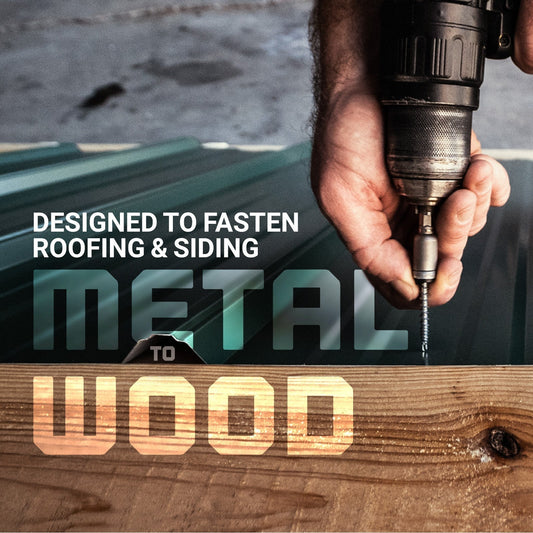
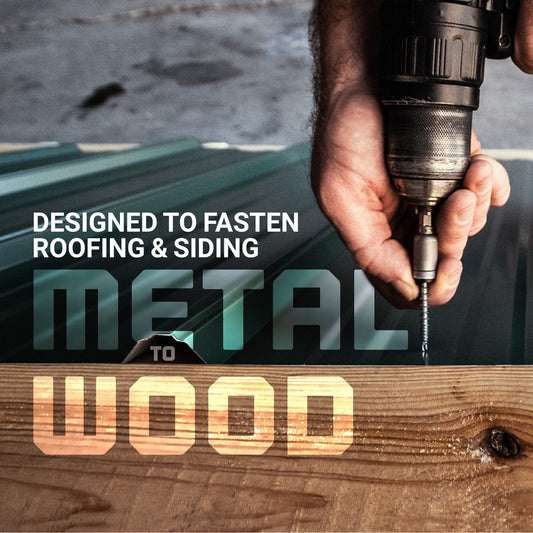
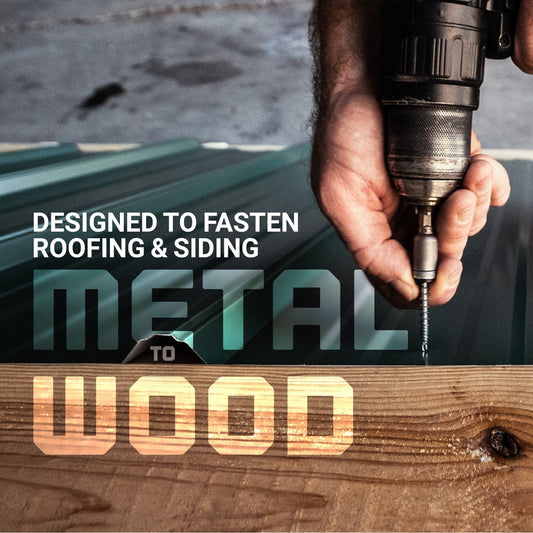
Metal-to-Wood Screws
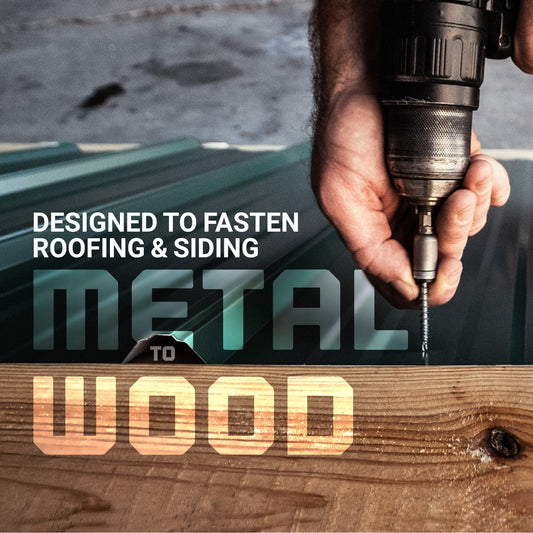
These are built for attaching metal panels directly to a wood substrate — purlins, plywood, OSB, or dimensional lumber. Coarse threads bite deep into wood fiber for a grip that won't back out over time.
Best for: pole barns, agricultural buildings, wood-framed homes, sheds, and stables.
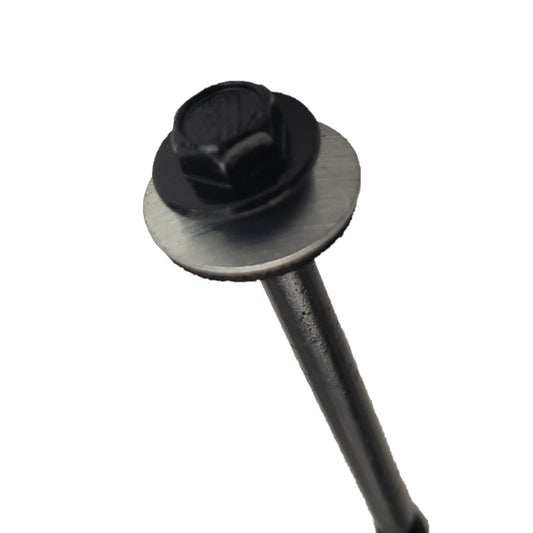
- Standard hex-washer wood screw — A #10, 1/4" hex washer head with fine-to-coarse threading for strong hold in wood. A sharp micro-bit point stops the screw from wandering ("point walking") on thinner 26–29 gauge panels, and a vulcanized EPDM washer keeps sealing even when the screw goes in at an angle.
- Zinc-alloy cupped-head wood screw — A #10, 5/16" cupped hex washer head cast from a zinc-aluminum alloy for long-term rust protection. The cupped design cradles the washer so it stays seated and sealed even on an angled drive into purlins, plywood, or OSB.
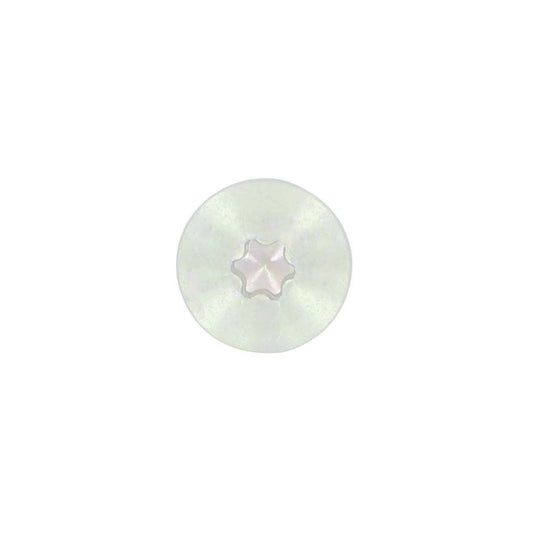
- Low-profile round-head wood screw — A #10 fastener with a T25 six-lobe drive and a rounded, low-profile head, popular on sidewalls where a flush finish matters. This head style is also a common choice around livestock, since it doesn't leave the sharp edge that a hex head does.
- Heavy-duty repair screw — A #14, 5/16" hex washer head fastener built to replace older or loosened fasteners. Its oversized bonded washer covers enlarged or worn holes and re-establishes a watertight seal without needing to relocate the fastening point.
- Stainless wood screw — A #10, 1/4" cupped hex washer head machined from 304 stainless steel for lifetime corrosion resistance — the right call for coastal jobs or livestock buildings with high ammonia exposure. Pre-drilling is recommended for steel substrates.
- Compact stainless-cap wood screw — A #9, 1/4" cupped hex washer head with a smaller stainless steel cap for a lower-profile alternative to the zinc-alloy option, while still delivering rust-free performance on post-frame and residential roofs.
Metal-to-Metal Screws
Fine threads and a self-drilling tip let these screws bite straight through steel purlins and framing without pre-drilling — a real time-saver on any job with a metal substructure.
Best for: commercial buildings, warehouses, carports, and high-wind regions.
- Heavy-duty steel screw — A #12, 5/16" cupped hex washer head that drills through steel up to 0.210" thick without wandering. The cupped head and bonded EPDM washer maintain a tight seal even at an angle, and a shorter companion screw is available for panel overlaps and pipe boot fastening.
- Zinc-alloy steel screw — A #12, 5/16" cupped hex washer head in zinc-aluminum alloy for lifetime rust resistance, self-drilling with a strong initial grip and reliable waterproofing.
- Low-profile steel screw — A #12 truss head with a T30 six-lobe drive for a flush sidewall finish, self-drilling through steel up to 0.210" with an undercut washer that seals even on an angled drive.
Choosing the Right Screw for Your Project
- Match the substrate — Wood-to-wood applications call for coarse-thread screws; metal purlins call for fine-thread, self-drilling screws.
- Consider your environment — Coastal air, livestock ammonia, and industrial exposure all call for stainless steel or ceramic-coated hardware.
- Check the length — Roofs with thick rigid insulation need longer screws — some insulation-rated screws run up to 8 inches — to reach solid substrate underneath.
- Plan for wind — In storm-prone regions, confirm the screw's wind-uplift rating before you buy.
- Match your panel color — Panel color names differ between manufacturers, so compare swatches directly rather than going by name alone.
Installation Tips
- Placement: Screwing into the flat of the panel versus the high rib are both accepted methods — installers are divided on this, but either done correctly will seal properly.
- Torque: Aim for the washer to bulge just slightly under the screw head. Too little torque leaves gaps for water; too much crushes the washer and breaks the seal.
- Sharp points on soft panels: A sharp-tipped screw driven without enough downward pressure can spin against thin panel steel and peel a small curl of paint away — often called a "frown." A self-piercing micro-tip largely eliminates this issue.
Keeping Your Roof Watertight Over Time
- Walk the roof once a year, and again after any major storm, checking for loose or backed-out screws.
- Swap out any screw with a cracked, hardened, or missing washer — a compromised washer is the most common cause of a slow roof leak.
- In coastal or high-moisture regions, keep an eye on coated fasteners and refresh protection where coatings show wear.
Frequently Asked Questions
- What's the difference between metal-to-wood and metal-to-metal screws? Metal-to-wood screws use coarse threads for grip in wood fiber. Metal-to-metal screws use fine threads and a self-drilling tip made for cutting into steel.
- How do I avoid overdriving a screw? Use a drill with an adjustable clutch and stop as soon as the washer starts to bulge — don't wait for the drill to stall out.
- What screws work best for pole barns? Long-shank, corrosion-resistant metal-to-wood screws are the standard choice for agricultural structures.
- What happens if I use a screw that's too long? An oversized screw can punch through the far side of the substrate, which is a real safety hazard inside a barn or shop.
- How do I make sure my screw color matches my panels? Compare an actual color chip against your panel rather than relying on the manufacturer's color name alone, since names for the same shade vary across brands.
Still Have Questions?
Metal roofing screws look like a minor detail until the wrong one lets water in. If you're not sure which screw fits your panel gauge, substrate, or climate, reach out — we're glad to help you land on the right fastener the first time.
